
Origin of the Term “Stolen Generation”

Did you know that the term "Stolen Generation" was coined in 1981 by the white Australian, Peter Read?
Even more interesting was that his paper "Lost Generation" was renamed to "Stolen Generation" on advice from his wife, Jay Arthur. This was not a decision based on evidence that proved the word "Stolen" was more accurate, but rather, this was her opinion, one that Peter Read then agreed with.
Who Heads the Native Tribe?
According to different writers, the community's chief could be the oldest man or the man proven to be most skilled, useful, and vital to the community's well-being. This position is accompanied by the freedom to have more wives.
How Do the Natives Deal With Land Trespassing?
Trespassing of land by strangers was a capital offence which was enforced without hesitation. However, native laws allowed controlled access to vital, localized resources - like specific foods or materials - or for carefully arranged inter-tribal gatherings.
Is There a Fixed Native Tribe Size?
Estimates of the sizes of native tribes varied, but a pattern is obvious: settled native tribes were typically small. Some chroniclers describe a tribe as comprising 20 to 60 families or 50 to 60 people, while others mentioned tribes of up to 1,000. However, most chroniclers suggest that a typical tribe with a core group of around 200 adult men (about 1,000 people total) was more plausible. There are also instances where more than one tribe joined together to form a larger group for specific purposes, especially for warfare or ceremonies.
What Is a Tribe?
The Torres Strait Islander Flag
The Torres Strait Islander Flag was designed in 1992 by Bernard Namok from Thursday Island.
It was the winning entry in a competition that was run by the Islands Coordinating Council as part of a cultural revival workshop in January 1992.
The flag prominently features a white dharri or dari (a type of headdress) with a five-pointed star representing the different island groups (Northern Division, Eastern Islands, Western Division, Central Division and Southern Division).
The colours have specific meaning, with:
- The green bands representing the land
- The Blue centre representing the sea
- The Black lines representing the Torres Strait Islander peoples
Like the Aboriginal Flag, it was officially recognised as a Flag of Australia under the Flags Act 1953 on 14 July 1995.
The Aboriginal Flag
The Aboriginal Flag was officially designed in 1970-1971 and its colours represent different aspects of Aboriginal life. The black symbolises Aboriginal people, the yellow represents the sun and the red represents the earth and the relationships between people and the land.
A lot of people will know that Harold Thomas, an Aboriginal artist has been accredited with designing the Aboriginal Flag, and he current owns copyright to it.
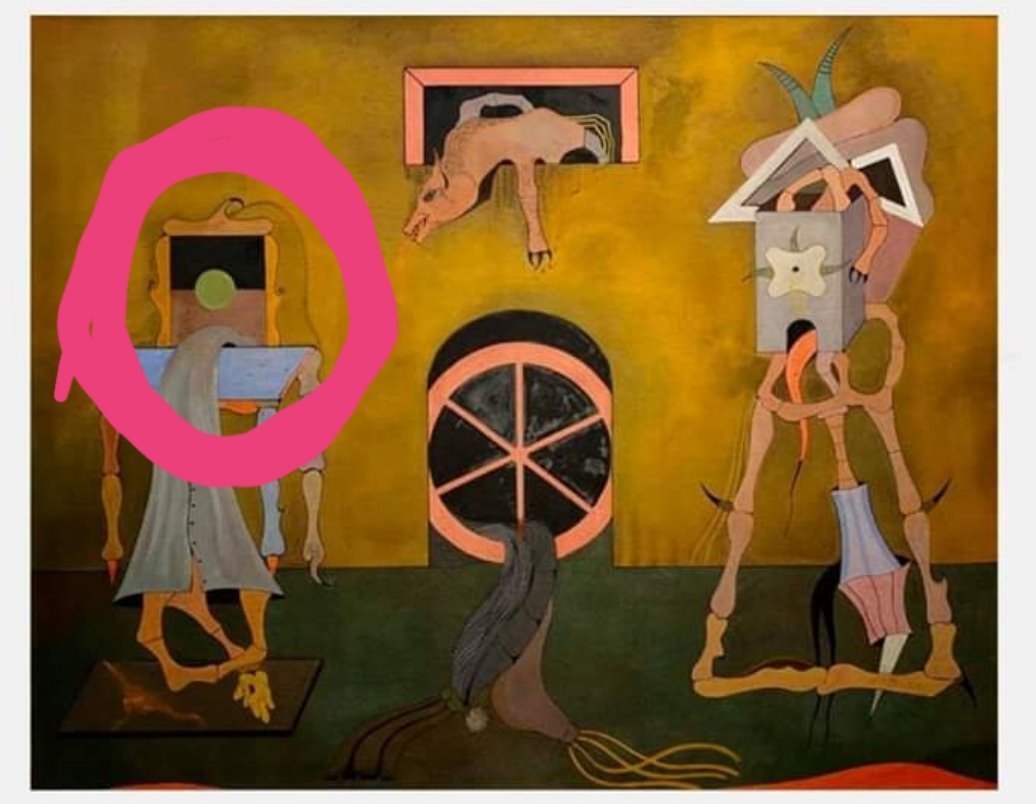
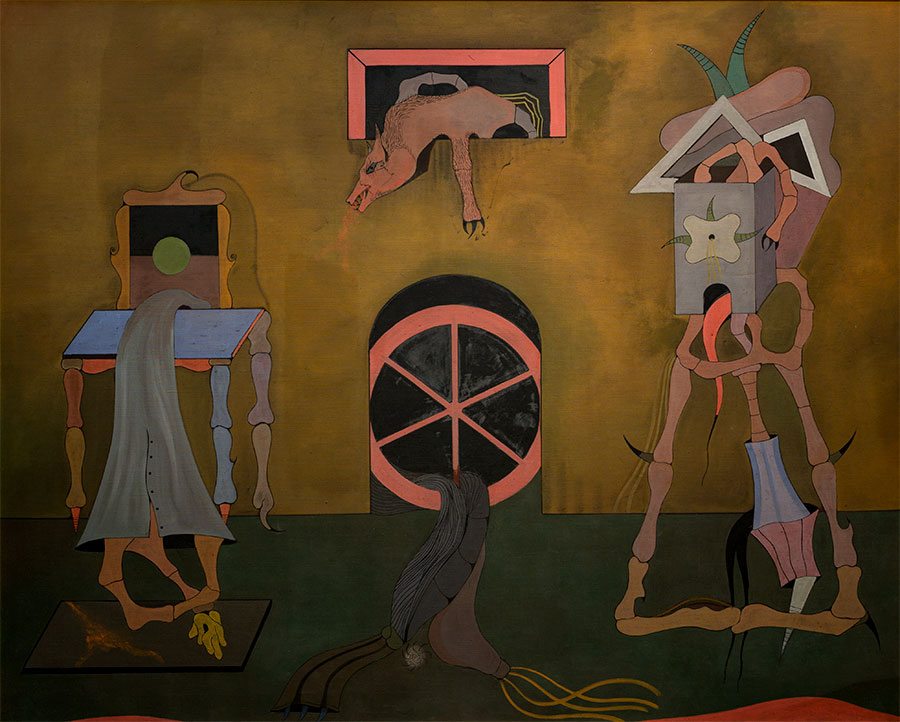
On the other hand, not many people will know that the Cuban painter, Jorge R. Camacho Lazo, 4 years earlier in 1967, created a piece of art called ‘The Night that Hides’. In this very unique artwork, there is an amazing "little picture" that is largely the same as the Aboriginal Flag!
Isn't history fascinating?